Key Takeaways
- ✓Ottawa's Zoning By-law 2008-250 sets minimum bicycle parking for new commercial, institutional, and multi-residential developments.
- ✓Class A (long-term) parking must be indoor or weather-protected with secure occupant-only access; Class B (short-term) must be visible and near principal entrances.
- ✓Federal-employer office buildings in Ottawa face additional GCWCC and Treasury Board active-transportation requirements that often exceed municipal minimums.
- ✓Ottawa's frost depth (1.2 m) and snow load (1.8 kPa) drive equipment specifications that differ from Toronto and Montreal.
Key Takeaways
- •Ottawa's Zoning By-law 2008-250 sets minimum bicycle parking for new commercial, institutional, and multi-residential developments.
- •Class A (long-term) parking must be indoor or weather-protected with secure occupant-only access; Class B (short-term) must be visible and near principal entrances.
- •Federal-employer office buildings in Ottawa face additional GCWCC and Treasury Board active-transportation requirements that often exceed municipal minimums.
- •Ottawa's frost depth (1.2 m) and snow load (1.8 kPa) drive equipment specifications that differ from Toronto and Montreal.
Ottawa is unusual among Canadian capitals: the City of Ottawa's bicycle parking requirements work alongside federal-employer policies, NCC (National Capital Commission) infrastructure standards, and bilingual procurement preferences. Developers planning commercial or multi-residential projects in Ottawa-Gatineau need to navigate all four layers.
Ottawa Zoning By-law 2008-250: Bicycle Parking Minimums
Ottawa's bicycle parking requirements live in the City of Ottawa's Zoning By-law 2008-250, with specific ratios that vary by land use and zone designation.
Multi-residential developments require a minimum of 0.5 long-term spaces per dwelling unit in most zones, scaling up to 1.0 per unit in central Mixed-Use Downtown (MD) zones. Short-term visitor parking adds typically 10% of long-term as Class B.
Office buildings require 0.13 long-term spaces per 100 m² of net floor area plus 0.13 short-term per 100 m² of customer-facing area. Mixed-use buildings combine both ratios proportionally.
Retail and commercial uses require 0.25 short-term spaces per 100 m² of customer floor area for visitor parking, with long-term employee parking based on staffing levels.
Institutional uses (schools, hospitals, community centres) require 0.5 short-term per 100 m² of public floor area, with separate long-term minimums for employees and (in schools) students.
Important: Always verify with the current City of Ottawa Zoning By-law. Specific ratios can change with secondary plans, community design plans, and zoning amendments.
Class A and Class B Specifications in Ottawa
Class A (long-term) bicycle parking in Ottawa must meet these specifications:
- •Weather-protected through covered shelter, enclosed bike room, or indoor parking garage allocation
- •Secure access restricted to building occupants — typically key/card/fob entry
- •Available 24/7 to occupants
- •Two locking points per bike (frame + at least one wheel) per CSA Z321
- •Minimum spacing 600 mm centre-to-centre between racks
- •Aisle width 1.5 m minimum for double-row access
Class B (short-term) bicycle parking in Ottawa must meet:
- •Outdoor location near the principal building entrance
- •Visible from the entrance for security visibility
- •Open to public during business hours
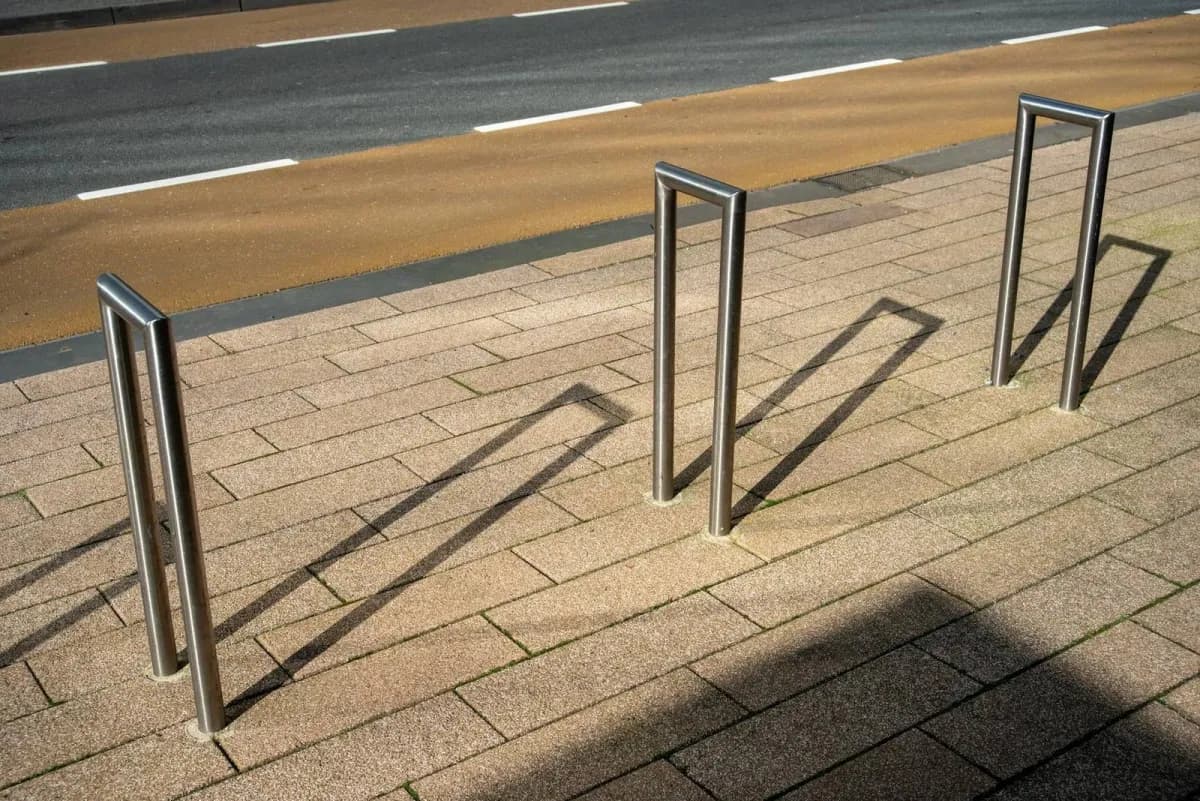
- •Inverted-U or post-and-ring racks with two-locking-point design
Climate and Engineering for Ottawa Projects
Ottawa-region installations face climate conditions distinct from southern Ontario or Quebec:
Snow load: 1.8 kPa for typical Ottawa-region bike shelter design — higher than Toronto (1.5 kPa) and equal to Montreal. Roof slope minimum 15° for snow shedding.
Frost depth: 1.2 m typical for in-ground installations. Foundations must extend below frost line; surface-mount installations require frost-protected slabs.
Winter: Ottawa averages -8 °C average winter temperature with 220 cm annual snowfall and 60+ freeze-thaw cycles. Hot-dip galvanized steel (ASTM A123) is the standard material specification for outdoor installations; stainless steel for premium architectural projects.
Wind load: Standard 0.7 kPa for Ottawa proper; higher for elevated downtown sites and exposed riverfront installations.
Federal Workplace and NCC Considerations
Ottawa is unique in Canada for having major federal-employer office buildings that follow Treasury Board and Public Services and Procurement Canada (PSPC) active-transportation standards. These typically exceed municipal minimums:
- •Federal office buildings often target 15-20% of total occupancy in cycling-capable months as bike parking capacity
- •NCC properties (Tunney's Pasture, Place du Portage, Confederation Boulevard) require coordinated infrastructure design with the National Capital Commission
- •Bilingual signage (English + French) required at all federal-employer installations and most NCC sites
- •Accessible (CSA B651) integration with broader site design
Developers and contractors working on PSPC and federal-employer projects in the National Capital Region need to design beyond the City of Ottawa minimums to satisfy federal procurement requirements.
Equipment Selection for Ottawa Projects
Recommended equipment specifications for Ottawa projects:
Outdoor Class B short-term: Hot-dip galvanized inverted-U racks (ASTM A123) with optional powder-coat finish in standard or city-specified colours. Minimum 600 mm spacing.
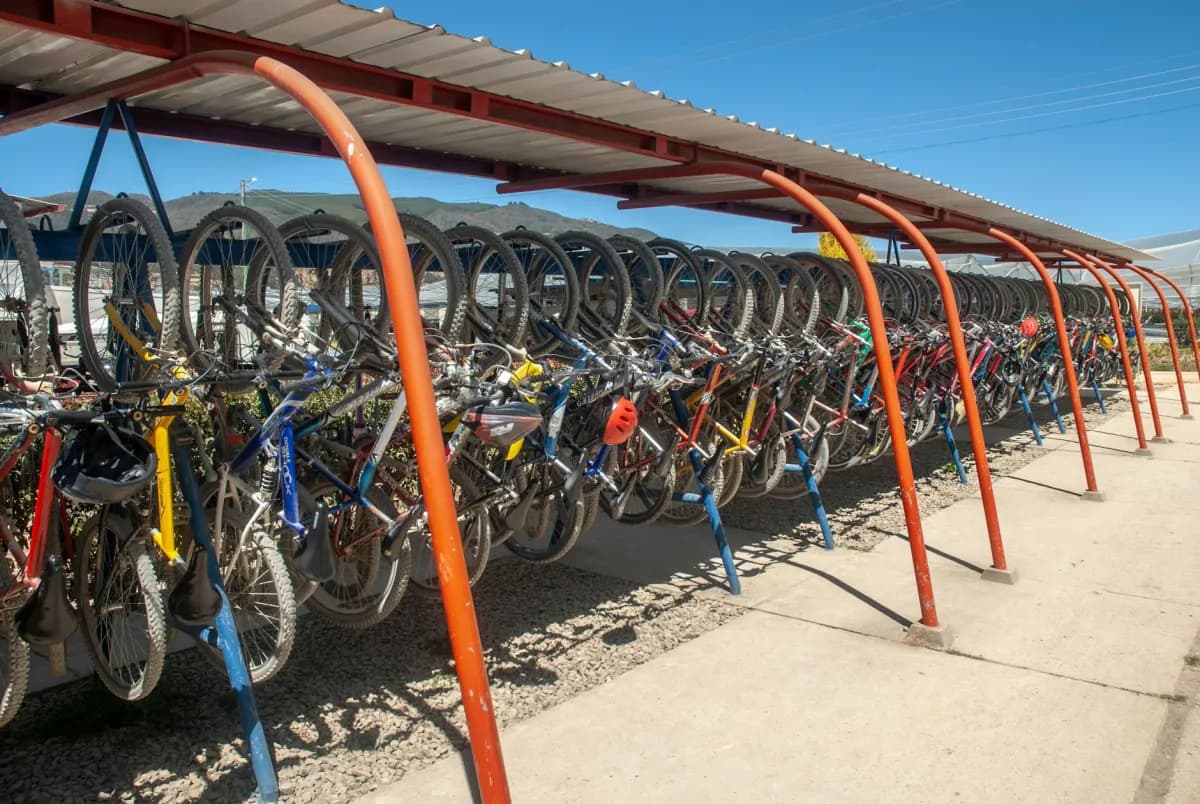
Outdoor covered Class A medium-term: Aluminum or galvanized steel bike shelter with polycarbonate or standing-seam roof at 15-20° slope. Minimum 1.8 kPa snow load specification.
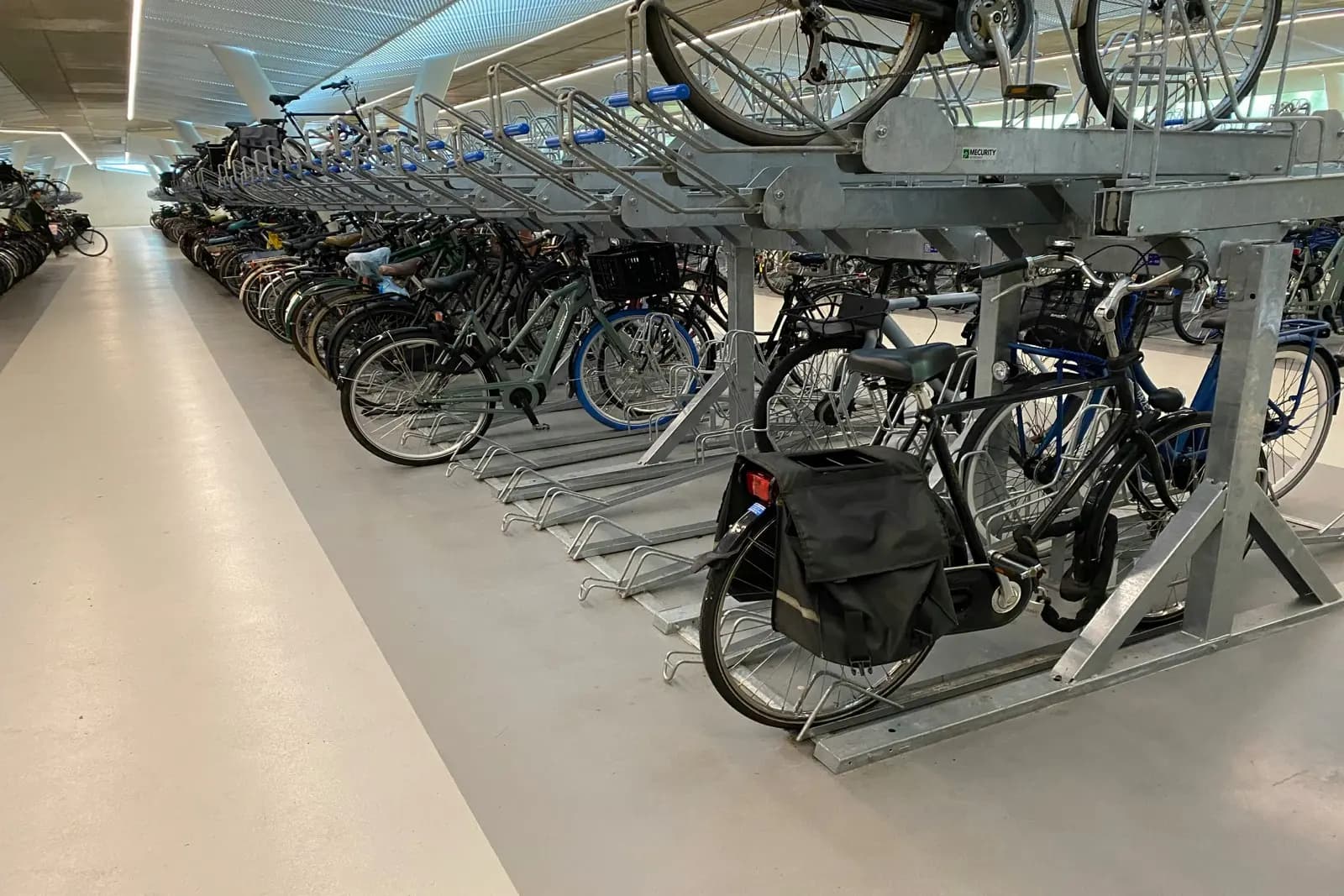
Indoor Class A long-term (bike rooms): Two-tier rack systems, vertical wall hooks, or wall rail systems with sliding hooks for mixed bike sizes. Card-access entry, 150 lux lighting, optional CCTV.
E-bike compatibility: Spring-loaded or gas-assist hooks for indoor installations; charging outlets (15 A circuit) at 30-50% of long-term spaces in new construction.
Permit Submission and Compliance Documentation
For Ottawa bicycle parking permit submissions, prepare:
1. Site plan showing rack locations relative to building entrances and accessibility routes 2. Equipment specifications including material standards, finish, and load ratings 3. CSA Z321 compliance certification for installed equipment 4. Stamped engineering drawings for foundation and structural elements (required for bike shelters and in-ground installations) 5. Snow-load engineering calculations for any covered shelter design 6. Bilingual signage plan for federal-employer or NCC sites
BikeRacks.ca provides full Ottawa-region installation services including stamped engineering drawings, CSA Z321 compliance documentation, and bilingual technical documentation for federal-employer and NCC projects.
Related Resources
- •Browse our outdoor commercial bike racks and bike shelters engineered for Ottawa climate.
- •Compare with neighbouring city bylaws: Toronto Bylaw 569-2013 and Montréal Règlement 04-047.
- •See bike rack installation in Ottawa and Gatineau.
- •Read our Class A bike room specification guide for indoor bike room design.
Frequently Asked Questions
What is the minimum bicycle parking requirement for an Ottawa multi-residential project?
Ottawa Zoning By-law 2008-250 requires 0.5 long-term Class A spaces per dwelling unit in most multi-residential zones, scaling to 1.0 per unit in central Mixed-Use Downtown (MD) zones. Short-term Class B visitor parking adds typically 10% of long-term capacity. Always verify current ratios with the City of Ottawa Planning, Real Estate and Economic Development department.
Do federal-employer office buildings in Ottawa follow City of Ottawa bylaws or federal standards?
Both. Federal buildings must meet City of Ottawa zoning minimums plus PSPC and Treasury Board active-transportation standards. The federal standards typically exceed municipal minimums, targeting 15-20% of occupancy in cycling-capable months as bike parking capacity. Bilingual signage and CSA B651 accessibility integration are also required.
What snow load should I specify for an Ottawa bike shelter?
1.8 kPa minimum for Ottawa-region bike shelters, with roof slope at 15-20° for active snow shedding. Northern Ontario or Outaouais projects should specify 2.0-2.5 kPa. Polycarbonate or standing-seam galvanized steel roofing both meet long-term durability standards in Ottawa climate.
Can I use surface-mount inverted-U racks in Ottawa?
Yes — surface-mount inverted-U racks work well on existing concrete slabs in Ottawa. Verify the underlying slab is frost-protected (insulated below or designed with thickened-edge perimeter). For in-ground installations, foundations must extend below the 1.2 m frost line.
Frequently Asked Questions
Where can I buy commercial bike racks in Canada?
BikeRacks.ca delivers bike racks across all 10 Canadian provinces and 3 territories. Order online or contact us for a free quote with fast shipping from our Ontario and BC warehouses.
What is the best material for outdoor bike racks in Canada?
Hot-dip galvanized steel is the best choice for outdoor installations in Canada. The zinc coating resists road salt, de-icing chemicals, and freeze-thaw cycles for 20+ years with zero maintenance.
How much do commercial bike racks cost?
Commercial bike rack prices range from $75-$2,500 depending on type, material, and quantity. Basic inverted-U racks start at about $200 installed. Volume discounts available for 10+ units.